During an appearance on The ProgCast, Meshuggah guitarist Mårten Hagström reflected on the band’s career. According to him, the group are “really grateful for the spot [they’ve] been able to get to.”
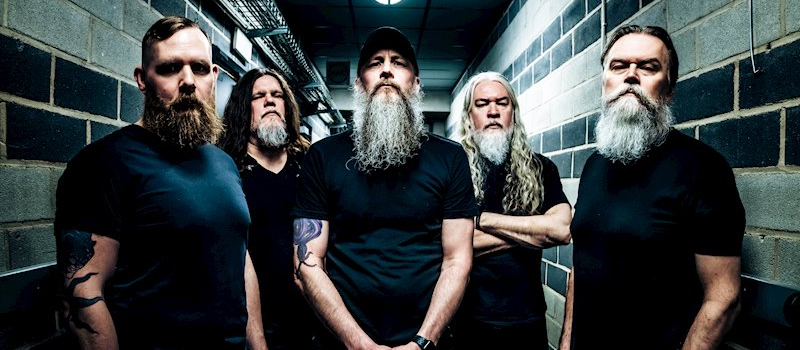
Hagström said the following:
“We’re getting up in the ages now. We’re getting older. We’ve been around for a while, been doing this for a long time. So, every once in a while, at least the last couple of years, we’ve kind of been reflecting on, or at least me, I’ve been reflecting on what our career has been.
When you’re in a musical project, and especially for us being glued together and pretty much all of us doing the same thing with the same people for a long time, it’s been a really rewarding journey. We’re really grateful for the spot that we’ve been able to get to. But I also think that sometimes it’s kind of hard to reflect, even though we maybe should. It’s, like, you’re so in the middle of it that sometimes we still see ourselves at as the upstart oddball band that we were as kids when everybody was side-eyeing us and going, ‘What are you guys doing?’ Even in the extreme metal genre or whatever, progressive genre, it was, like, ‘Dude, what are you up to? What’s going on?’ Like Tosin [Abasi, founder and lead guitarist of the instrumental progressive metal band Animals As Leaders] told me once, the first time he heard us, he said, ‘This music is broken.’
I guess us being stubborn and keeping true to our vision and grinding away at, well, our craft, or whatever you wanna call it, is a unique blessing, to be able to do that. ‘Cause you can make up all the plans you want, but life gets thrown at you, and people go their different ways, you evolve in different directions. But even though we still have as musicians and individuals in the band, we still kept this a family thing and we still kept our joint vision in the forefront so that we’ve been able to do this for such a long time. And then, of course, having some moderate success has helped us as well. But we’re truly grateful.”
He continued when asked if the success was “hard earned”:
“Uh, yeah, I guess. It’s hard to compare yourself to other [musicians]. A lot of times when I talk to other musicians, they’ve been in so many different settings. They might have been session musicians, they went to school, they’ve been in a bunch of bands, but for me personally, I got to know Tomas [Haake, Meshuggah drummer] in kindergarten. We were six, and we started playing at 11, 12 together. Jens [Kidman, Meshuggah vocalist] and Fredrik [Thordendal, Meshuggah guitarist] started playing [at] 13, 14 years of age together. Me and Tomas had this band. When Meshuggah’s drummer left, the two other guys me and Tomas were playing with, they went their other way, they wanted to pursue other genres, so Tomas left for Meshuggah and then a year and a half after that I joined Meshuggah. So we’ve known nothing else. I mean, I know other musicians and you see other careers, but being so stuck in this bubble, so to speak, it’s been… I think we’ve worked hard at our craft, but I don’t know if it’s hard earned. I think we’re still just, ‘Wow, are we able to do this with this?’ This type of music and going outside of the box and still making a career out of it. ‘Cause sometimes that’s a hard thing. The mainstream’s always trying to reel people in. And we’ve been lucky enough to resist that.”
He went on to discuss the current state of the band:
“Well, at the moment I really think I’m in ‘exhale’ phase. ‘Cause we’ve done this a long time, we’ve done this cycle and coming out on the back end of the touring for [Meshuggah’s 2022 album] ‘Immutable’, I think I’m a bit — not like in a bad way, but creatively spent. And that’s something that happens, ’cause first you write stuff and you record it, and then you go out and, almost like the crowd, you relate to it, you learn what you actually did. It’s, like, ‘Oh, I didn’t realize it at the time, but this is this kind of song.’ And ‘this I thought would work well in a live environment and it doesn’t, and it’s obvious why it doesn’t, but this works really well and I didn’t think it would,’ stuff like that. So you learn about your own music in many ways with going out and touring with it, ’cause it’s a more visceral reaction to stuff. It’s more straight from the heart. And you see it resonate in different ways, and then you get reactions.
For me, I tend to, and this is mostly true, that as we’ve grown older, or as I’ve grown older, it takes a longer time for me to get up and running again, ball rolling for the creative process. So right now my ideas are few and far between comparatively. ‘Cause what happens when we start a creative process, what happens when we decide to write an album and I sit down and I have a couple ideas that maybe were left over from the last time and I’m just picking things up, getting back into the groove of it. That sparks the imagination so that I get more ideas. But in order to have the energy to just feel like getting into a creative process, to shoulder that burden — it’s not a burden per se, but to feel that you have the energy to go through the emotional gauntlet that a making of an album is, writing, rehearsing, debating, recording, all of that, you need that exhale. You need that downtime for the mind. And that’s where I am right now.”
He also added the following after it was pointed out how some bands operate on an “intake” mode, an “output” mode, and an “off” mode:
“Yes. And I think depending on who you are as a person and the way you’re wired, those periods come in different order. Some people are just, like, ‘All right, I had a week down. That’s it. I need to get back into the swing of things.’ And some people, I think, have to have more time to just recuperate and get that energy back.
I hope I’m not a lazy person, ’cause I know that when I write, I work a tremendous lot, like many hours a day for months and months and months, and I’m just into the zone. And having that bubble mentality, I think most composers do, I believe. It’s like working out — you need to kind of get in shape in order to be able to do it for that kind of stretch of time, mentally get in shape. And that’s where I am personally. But I know that Fredrik’s working in his studio with his stuff and his projects and the bands that he and [producer] Daniel Bergstrand are working with producing, Most of us have stuff at home that we’ve been pushing to the side, ’cause we’ve been out touring, that we need to take care of practical stuff — renovating the house, stuff like that. But I know Dick [Lövgren, Meshuggah bassist] has started to fiddle around a little bit, just for fun. Not like seriously writing, but messing around with stuff. So I think it’s a natural thing where there’s a vacuum, and then you all of a sudden start feeling that maybe it’s about time to [get back to work]. It’s subconscious and it starts working and it tells you, like, ‘Okay, now you need to do stuff. Here’s an idea.’”
[via Blabbermouth]
 Metal Anarchy
You must be logged in to post a comment.